

In this deep dive, we’ll break down how to build a successful life and career in Nigeria—where the odds are stacked against you.
Part 1 (you are here): How to build a successful career in Nigeria
Finding the best path to financial freedom
The typical Nigerian career story in a broken system
How to decide whether to “chase tech”, go into business, or build a personal brand
Part 2: How I built a global career without leaving Nigeria
How to land international remote roles
Standing out to recruiters and hiring managers
Building a personal brand on LinkedIn
Nigeria’s education system is broken, curriculums are outdated, and we do not receive proper guidance before choosing careers. Here’s the typical Nigerian path that you can probably relate to:
Go to school (primary to secondary)
Most “smart” students go to Science class / dept
JAMB decides what school and course you study in an institution of higher learning
Get deployed to serve Nigeria—NYSC
What next ?
I grew up in Nigeria to a Ghanaian dad and a Nigerian mum. And like many of you reading this, I was raised in a Nigerian educational system that didn’t teach me how to build a career—just how to pass exams.
This story is deeply personal. It’s also practical. Whether you’re trying to choose between the corporate 9-to-5 world, entrepreneurship, or the creator economy—or still confused about what fits—you’ll find clarity here. I’m sharing my own journey through it all, what I’ve learned, and how you can start making smart, intentional decisions about your future.
Let’s start from the beginning.
My Nigerian career story in a broken system
Early years. The young shall grow.
Growing up, I was an all-round student, both creative and analytical. I was always top of my class from primary to secondary school. I remember finishing second position in primary four and it seemed like the whole world was highly disappointed in me (like it was a sin for me to come second place, and I had performed worse than whoever came last in class).
I had an initial interest in creative arts; I was really good at sketching comics. I was also really good at drawing lab equipment, maps of Nigeria and Africa, etc., so I did make some money from my classmates, and even seniors to help them with their assignments and projects. Unfortunately, I was discouraged by my parents. They didn’t think there was hope for an artist.
I always wanted to solve big problems with science, and I particularly loved the cartoon; Jimmy Neutron, and how he could bring really complex ideas to life from his big brain. He was a genius. That’s who I wanted to be. In fact, my name is actually Jimmy. You see?

JAMB or UTME?
I had limited information & career guidance at the time, so when it was time to choose a course of study at University, I chose Biochemistry.
I wanted to be like Dr D.K. Olukoya, the general overseer of MFM who graduated from the University of Lagos with a first class in Microbiology. But, I thought Biochemistry sounded way cooler, and it combines Biology with Chemistry. Oh well!
To get into an institution of higher education in Nigeria, you need to sit for JAMB exams. The year I took the exams, a large number of candidates failed woefully. The majority of the scores ranged from 100-198 (out of a total possible score of 400). I scored 217 but that was only enough to get me an aggregate that got me admitted into Physics Education at UNILAG.
I was uninterested in accepting the admission but my mum heavily pressured me, so I did. I saved up some money and registered for another JAMB exam for the coming year, but no one was aware of this.
I resumed at UNILAG but I was unhappy with my course of study. I still tried to make the best of it anyway and by the end of the first semester exams, I scored a 5.0 CGPA (a perfect CGPA). This caught the attention of the department, coursemates and staff. However, this was not sufficient motivation to keep me in the program. I still wanted to do Biochemistry.
When the time came, I took the JAMB exams and scored 246. I completed the Post-UTME exams in Unilag, and I scored enough to get admitted for Biochemistry—my dream course at the time. In the following session, I was an undergrad Biochemist.
What did you study in university? What’s your own story?
Where can you work as a Biochemist? Anywhere. Nowhere.
Penultimate-year students are mandated to participate in the Students Industrial Work Experience Scheme (SIWES). One of the requirements of this program was that undergrads had to go out to find a company or institution that could act as a placement for them for at least three to six months.
I applied to scores of companies at this time but I found out that it was extremely difficult to get a placement because connections were more important than skill in many companies—and I was not well connected. I did not have many options. This made me disillusioned with the career outlook in Nigeria, and I was also sure that I wasn’t going to have a real career as a Biochemist. I eventually found a company to register for my SIWES placement, and completed the program.
I graduated from UNILAG with a 4.48 CGPA in 2018. It’s been 7 years now. I’ve worked with 20+ companies across 3 continents (Africa, North America, and Europe)—leading go-to-market (GTM) strategy, customer acquisition, and demand generation efforts. I’ve probably been involved in over 40 projects in my professional career, either as a full time employee, a consultant, or a freelancer.
I’ve made thousands of dollars from gigs on Upwork. I’ve been headhunted by recruiters on LinkedIn multiple times. I have also been working remotely since 2020 (the pandemic).
But, none of this is directly related to my Biochemistry first degree from the university.
What am I supposed to do with my life?
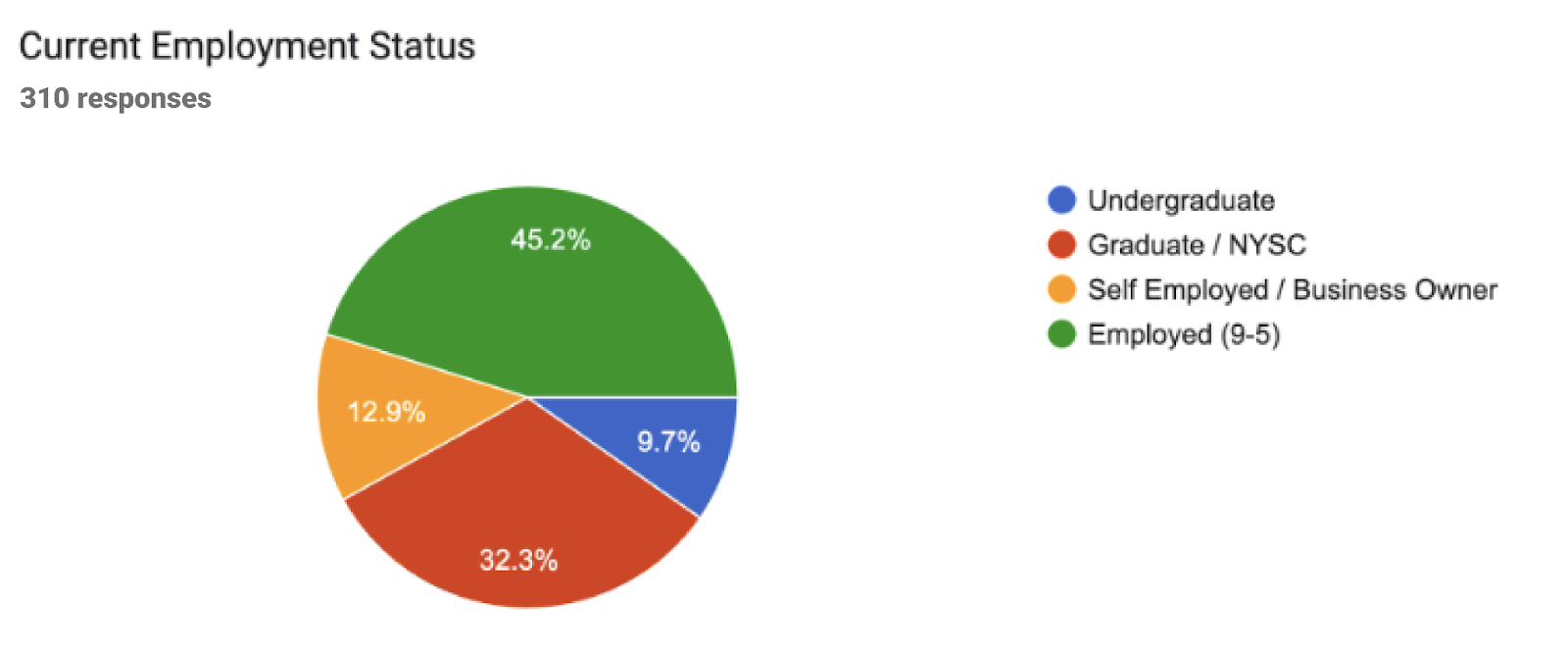
I ran a survey last year to see where young Nigerians were in their lives and careers, and what they wanted to pursue. The survey received 310 responses from undergraduates (9.7%), graduates in NYSC (32.3%), self-employed/business owners (12.9%), and people in corporate (45.2%).
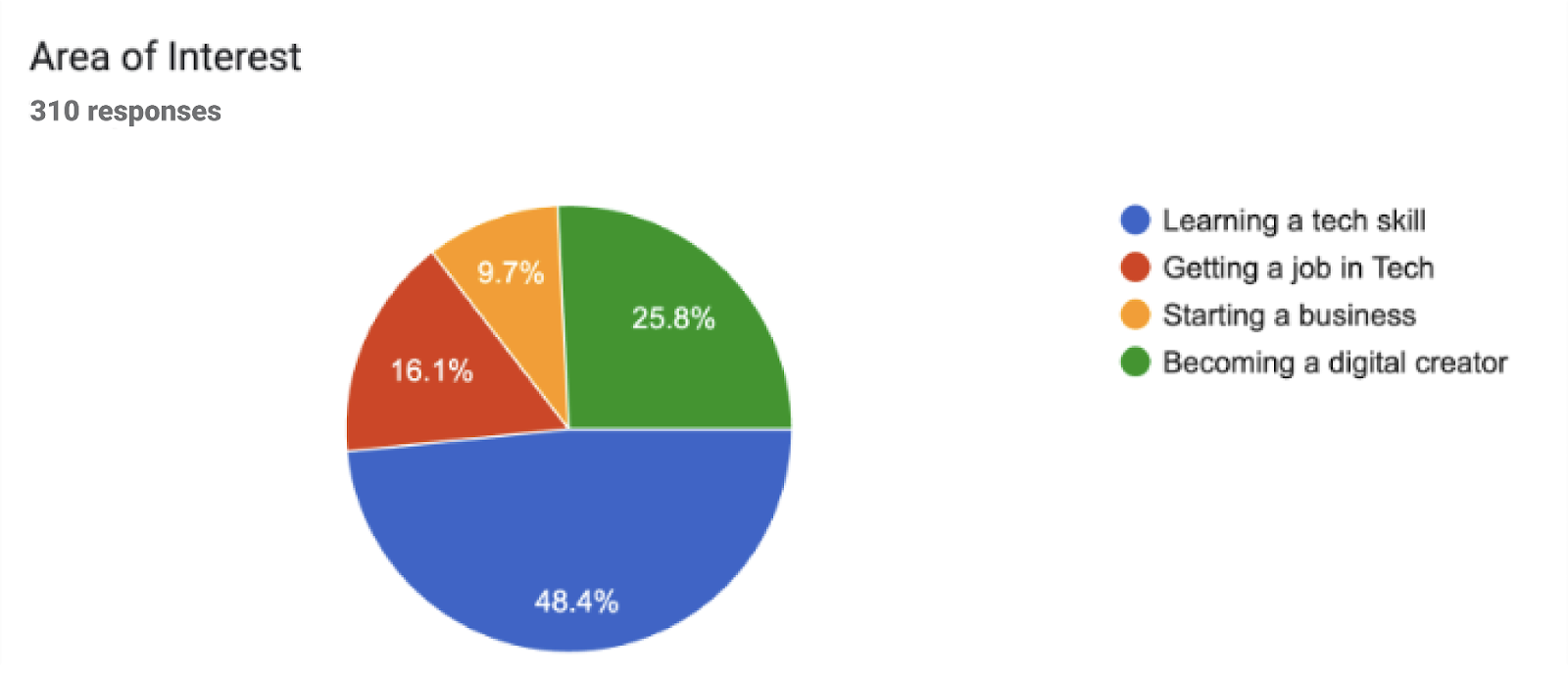
It was interesting to see that 48.4% were interested in learning a skill, 25.4% were interested in becoming digital creators, 16.1% were interested in getting a job in tech, and 9.7% were interested in starting a business.
There are many ways to kill a rat
There is more than one path to success.
Success for you might mean achieving financial freedom (along with other intangibles like fame, growth, power, and connections), by doing something you're skilled in and/or passionate about that is also valuable and profitable.
I’ve written about how to think about money, and creating a value system for defining success here.
Whatever path it is that you choose to pursue on this journey, here’s some advice that I wish I got when I was much younger.
1—Identify your strengths
Reflect on your past experiences and achievements to identify what you excel at. Seek feedback from peers, mentors, or supervisors to understand your strengths from an external perspective.
2—Play the long game
Success often takes time; focus on consistent progress rather than immediate results. Also be open to change and be ready to pivot strategies as needed.
3—Understand the market size for what you’re offering
Do research to validate if there’s a market for your skills, passion, or business. Identify what sets your offering apart in the midst of competition, and position yourself uniquely in the market.
4—Build skill & competence
Identify the key skills required in your chosen field. Take online courses, workshops, books, and find practical experience to build these skills.
5—Find community and build your network
Networking is about adding value. Find ways to do this consistently. Join relevant communities, share knowledge, offer to help, and be proactive.
I’m sharing everything I know
I’ve written an e-book on how you can build a successful career in Nigeria, despite the odds. I’ve also done a webinar on this. It’s all free, and you can get access to them here.
If you want to pursue a similar tech / corporate / marketing / remote work career like mine, my next article goes into more detail about how I developed the skills and positioned myself to build a global career from Nigeria, with actionable templates and strategies.
Biochemistry.