


Between 2022 and 2023, I made what many might call an unconventional pivot. After years in marketing, I stepped into a tech sales role—not because I was dissatisfied, but because I wanted to understand what happens after awareness is driven and leads are generated.
At the time, I was working in a B2B SaaS company as a marketer, but I was increasingly curious about what happened next—how were those leads being converted? What was the sales team doing with them? Why did it sometimes feel like marketing and sales were rowing in opposite directions?
The approach in most B2B organizations is that marketing generates leads and sales closes them. Or sales leads the GTM strategy while marketing supports it. There was no intersection between both roles.
Even in that company, there was a significant disconnect between the go-to-market (GTM) relationship between sales and marketing. And I needed answers.
That curiosity became the catalyst for change. I wasn’t just interested in “driving top-of-funnel activity”—I wanted to understand how to close the loop.
While exploring this, I also developed a keen interest in growth marketing as I realized that it wasn't just a subset of marketing. It was a cross-functional approach that touched multiple areas of a business. It blends marketing, sales, partnerships, product, and even customer success—all unified by a single goal: generating sustainable revenue.
So I made a bold decision—I started applying for sales roles. I found a role on LinkedIn that was Sales Manager at Cecure Intelligence Limited (CIL).
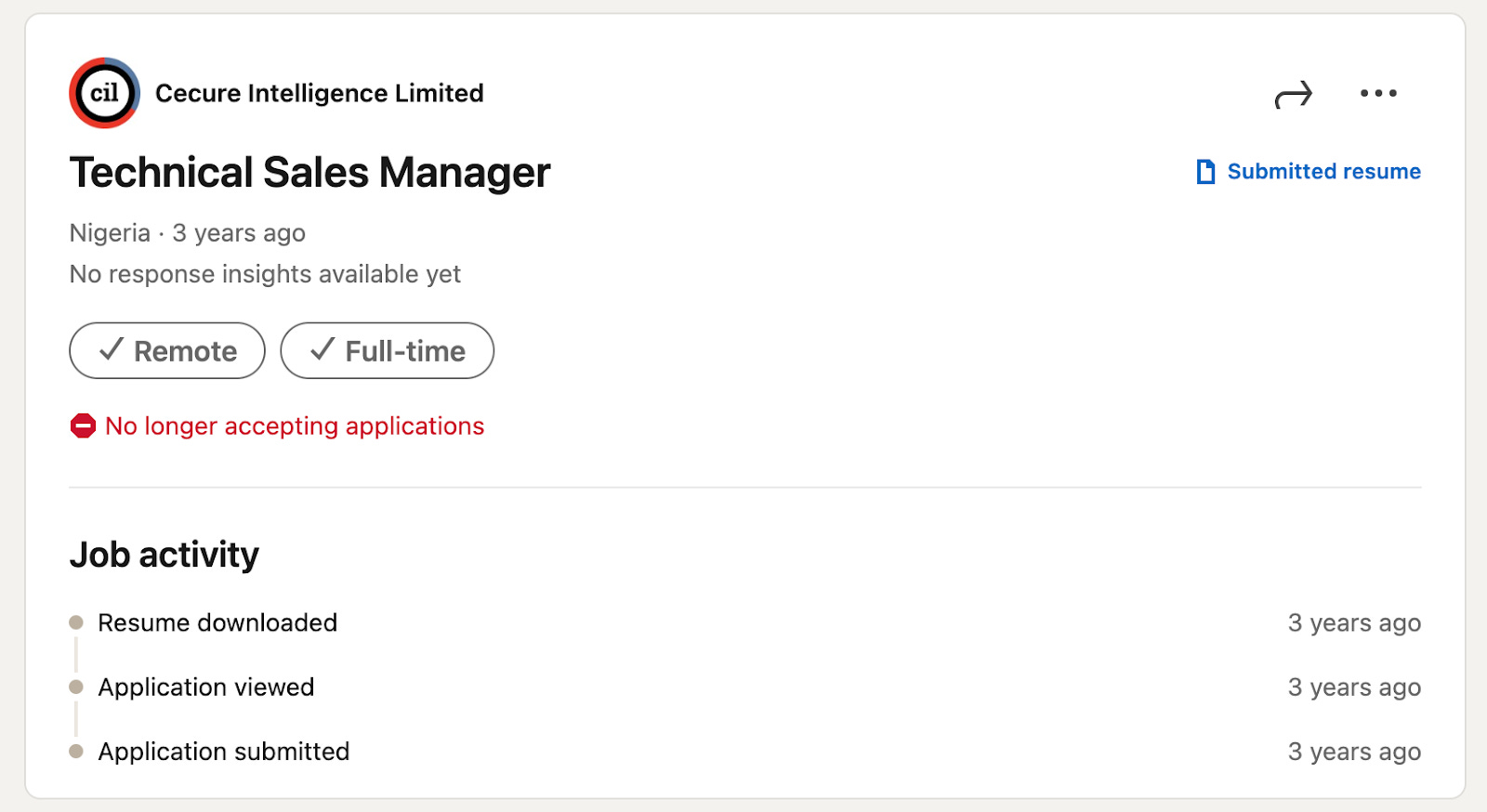
I applied, did the interview, and I got the job.

You would expect everything to go breezy from there, right? Not at all.
Building the sales function from the ground up
Landing the Sales Manager role at Cecure Intelligence Limited (CIL) was a different ball-game. The opportunity stood out because: 1) it wasn’t a traditional sales job., and 2) I was joining as the first commercial hire. There was no existing sales team—just me.
I had to figure everything out from scratch. That meant:
Defining what a sales org should look like
Understanding how marketing and sales can have shared ownership of business goals
And align customer success around the same systems in the GTM execution
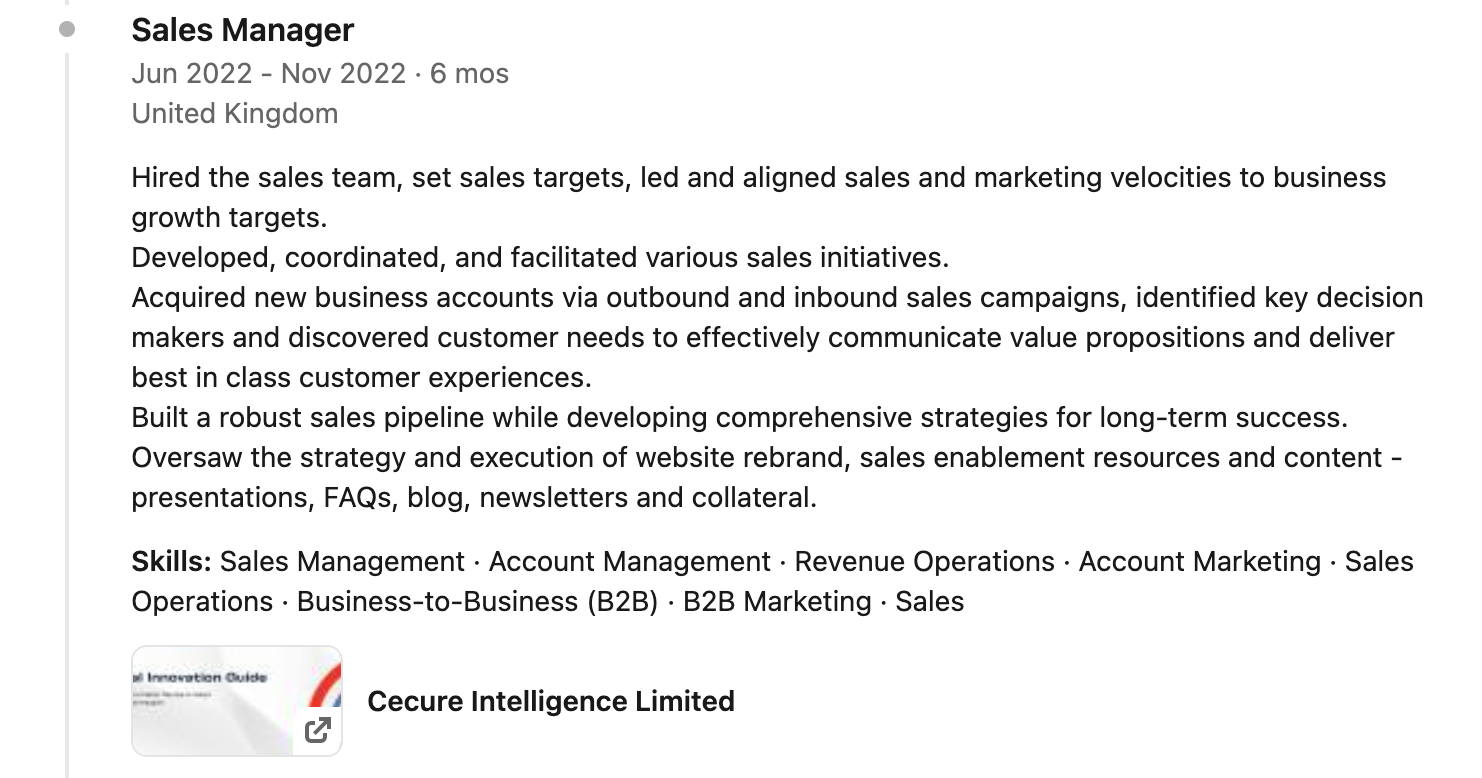
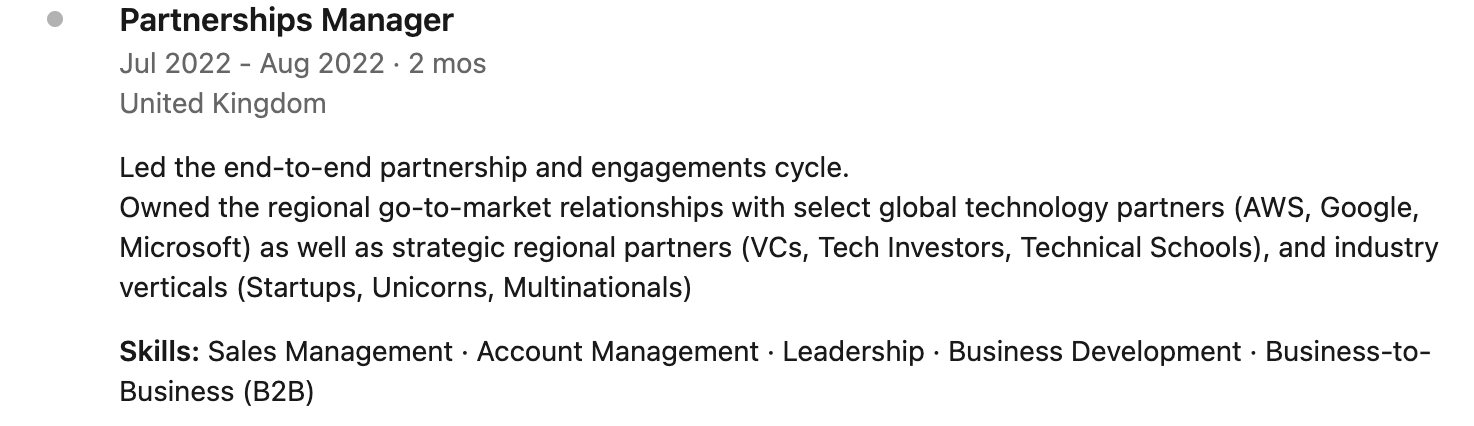
We were a B2B technology company, working closely with cloud partners like AWS, Google, and Microsoft. That added another layer to the job. Soon, I was also managing partnerships—navigating certifications and competencies with these cloud providers.
I was responsible for the entire sales process, from prospect research and cold outreach to creating pitch decks, writing emails, and building our sales tech stack. Over time, I began expanding the team. I hired for marketing, sales development, account management, and more—all while still wearing multiple hats, including overseeing marketing myself.
Because I was taking on all of these responsibilities, I had to learn on the job. So, we could see timely results for the efforts we were putting in. After a while, I got promoted.
The reward for good work is more work. Chief Revenue Officer
The truth is: the reward for good work is more work. Just when you think you’ve done the most, you realize there’s still more ahead. From managing the sales team, I was promoted to Chief Revenue Officer (CRO), which further increased my responsibilities.
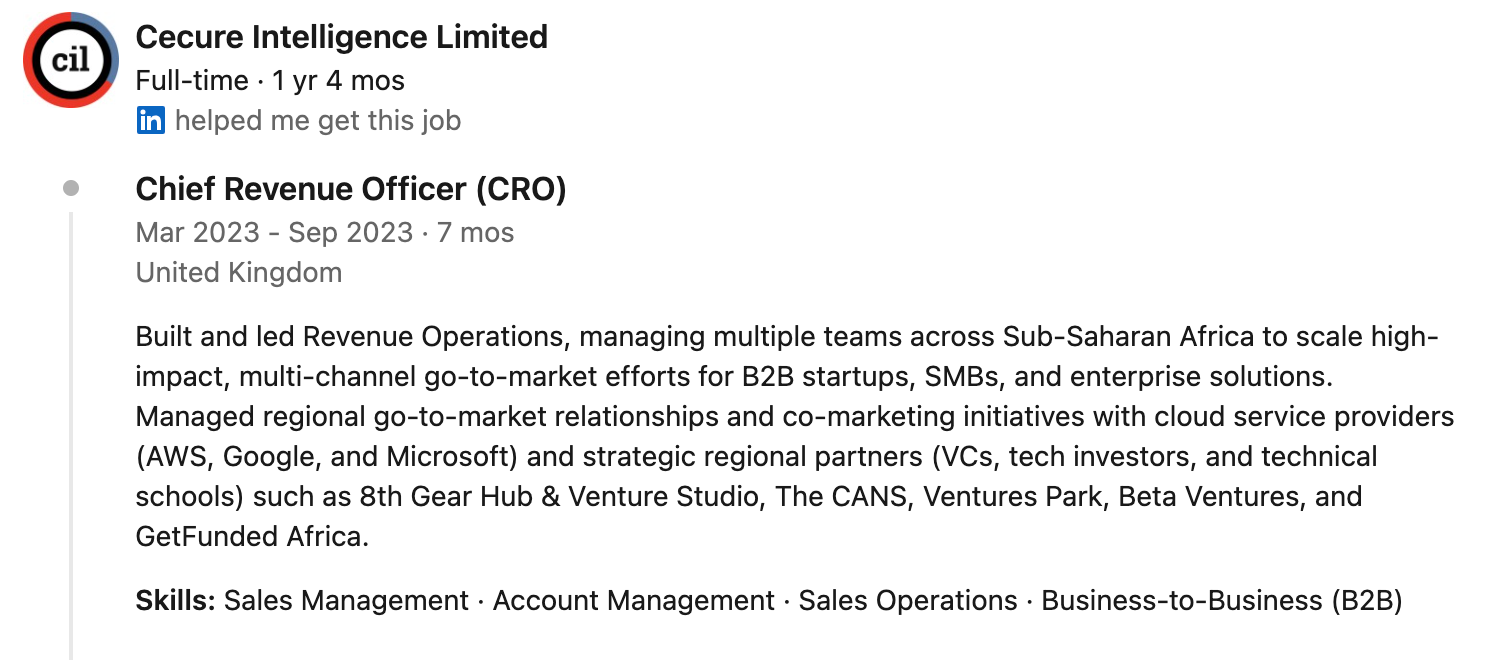
We had expanding business lines aside from just the B2B tech cloud services we were selling at CIL. We launched a B2C business—CIL Academy (a technical training academy), at the time, and I was responsible for it. I doubled as Growth & Marketing Manager to lead the go-to-market strategy, from market entry planning to team hiring and execution.
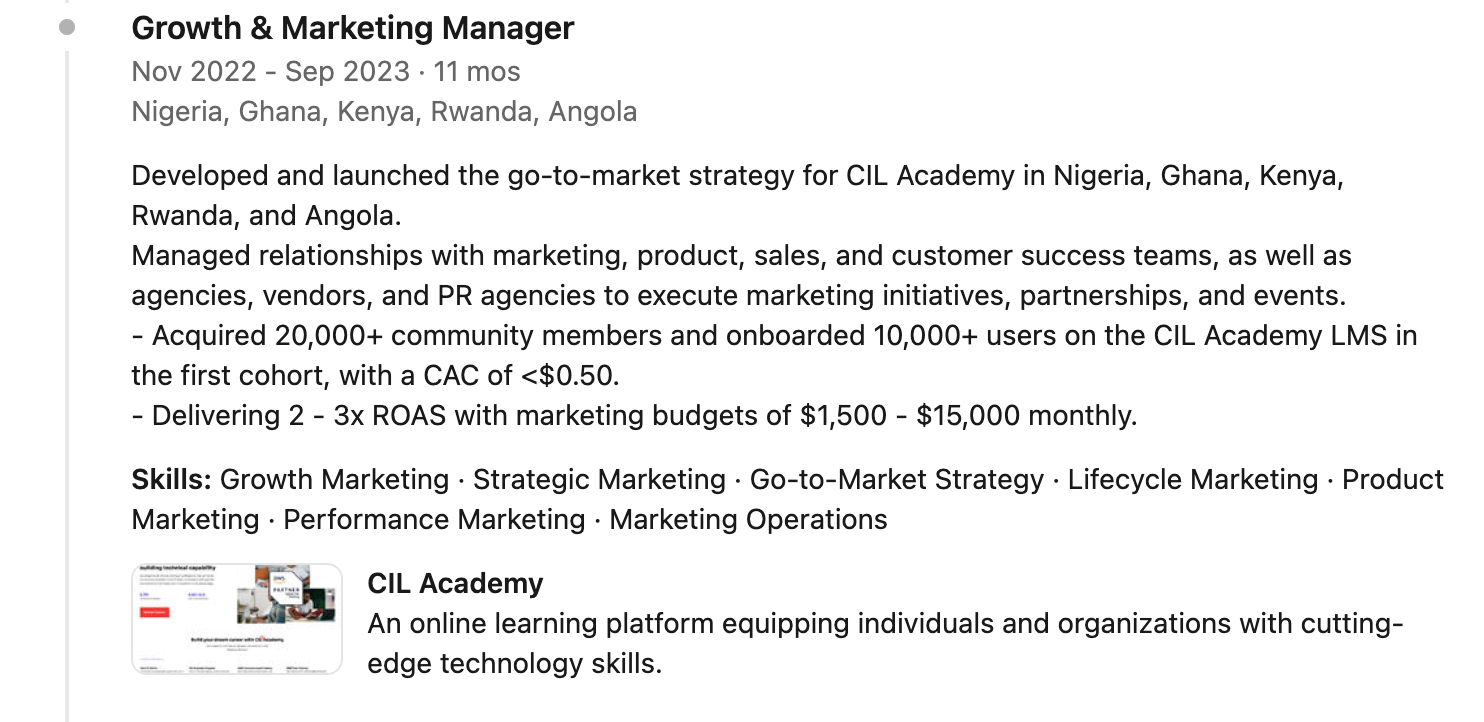
As CRO, I was responsible for aligning and building every growth-related function: marketing, sales, partnerships, and business development. I hired and onboarded every team member, designed our processes, and implemented the tools we used. I also pursued certifications from HubSpot, Salesforce, AWS, and other platforms—learning and applying best practices in real time.
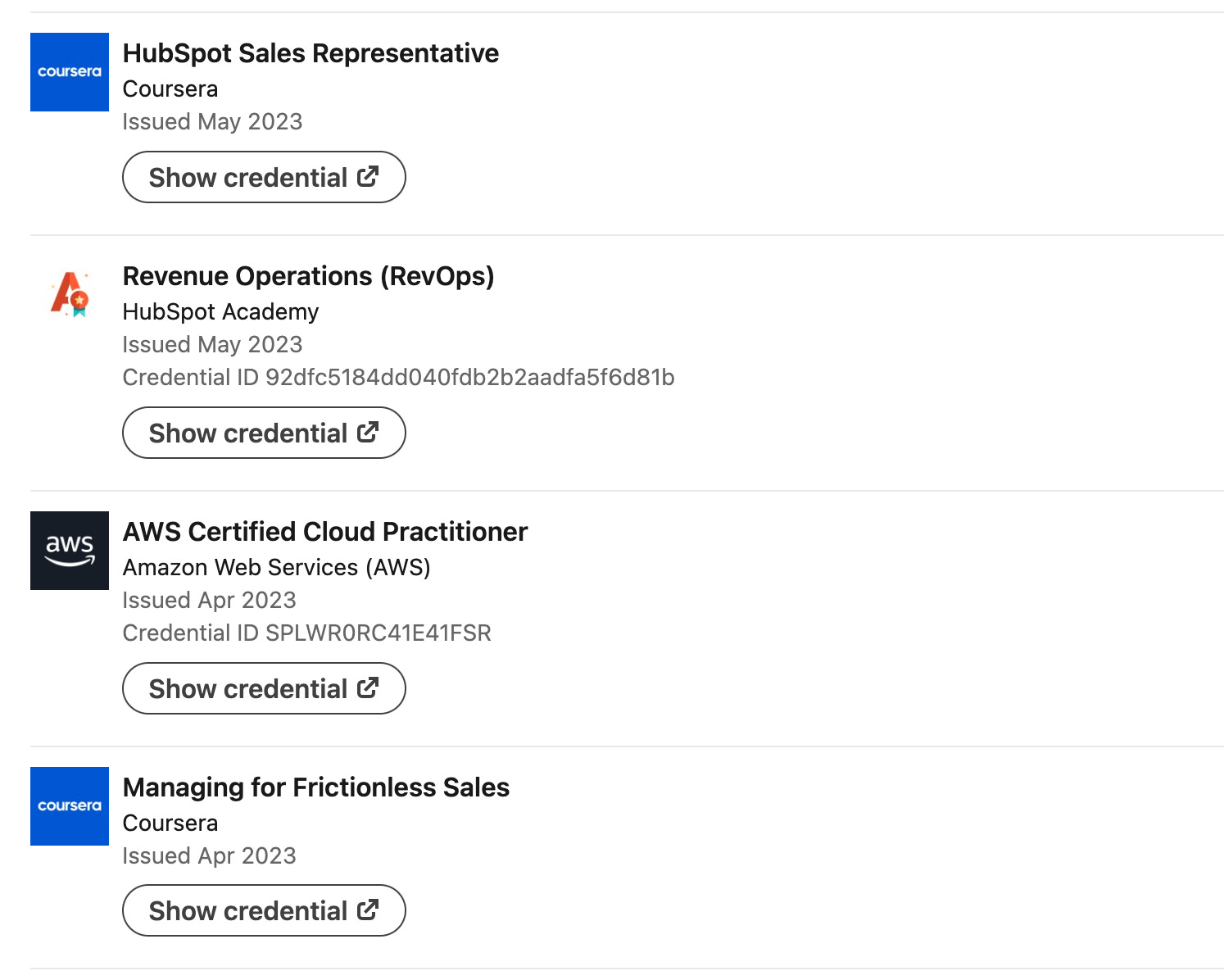
Have certifications helped your career?
Coming from a marketing background, achieving the level of impact I did at CIL was something I was genuinely proud of. It was a win-win situation, both for the business and for me, as I was navigating this role for the first time.
One dashboard, one goal, one unified team
One of the most valuable lessons I learned during this time was this: sales and marketing must be aligned not just in strategy, but in systems. At CIL, we unified both functions under a shared GTM framework where:
We reported on the same dashboards
We chased the same target accounts
We built strategies anchored around our Ideal Customer Profiles (ICPs) whether targeting enterprise, SMB, or government clients.
Instead of individual departments (marketing and sales) owning their lane, I’ve learnt that marketing should work hand-in-hand with sales to drive business impact, as they are both cohesive functions of the GTM team. They should have shared ownership of business goals, OKRs, and align around the same systems in their GTM execution.
This alignment is what leads to better forecasting, clearer accountability, and more effective campaigns. Because when sales and marketing move as one, the business wins.
In fact, for the business to deliver the best possible customer experience and drive sustainable growth, all GTM teams—sales, marketing, product, customer success/support must work from a shared vision. And this responsibility starts at the top.
That means company leadership (at CIL, this was me) must set the strategy for how the company will make money or acquire customers, or do both—in the long term (growth strategy) or in the short term (GTM strategy).
Whatever growth strategy and GTM motion is adopted by the business will dictate the relationship amongst the GTM teams.
The title doesn’t matter as much as the business goal. Whatever your role—marketer, sales rep, SDR, or Account Manager—it’s this cross-functional approach that moves the needle.
I’m sharing everything I know
This experience, spanning B2B and B2C, sales and marketing, partnerships, and operations, gave me a clear and practical understanding of what a truly effective go-to-market team looks like.
Although I returned to my first love, which is marketing, my experience as a CRO shaped how I approach growth, ensuring alignment between teams, customer segments, and long-term business goals.
This is why I created a comprehensive tech sales training course and handbook that covers the fundamentals of tech sales, sales processes, engagement, tools, analytics, and essential soft skills.

It’s a course that offers clarity, structure, and career insight, especially if you’re:
Trying to break into or move up in tech sales
Struggling to connect the dots between marketing, sales, partnerships, and RevOps
Looking to improve performance, hit quota, and grow your earnings
Looking for real-world narratives and not just theory from textbooks or LinkedIn posts
You’ll find pre-recorded videos from me, a detailed handbook, and free access to bonus resources.